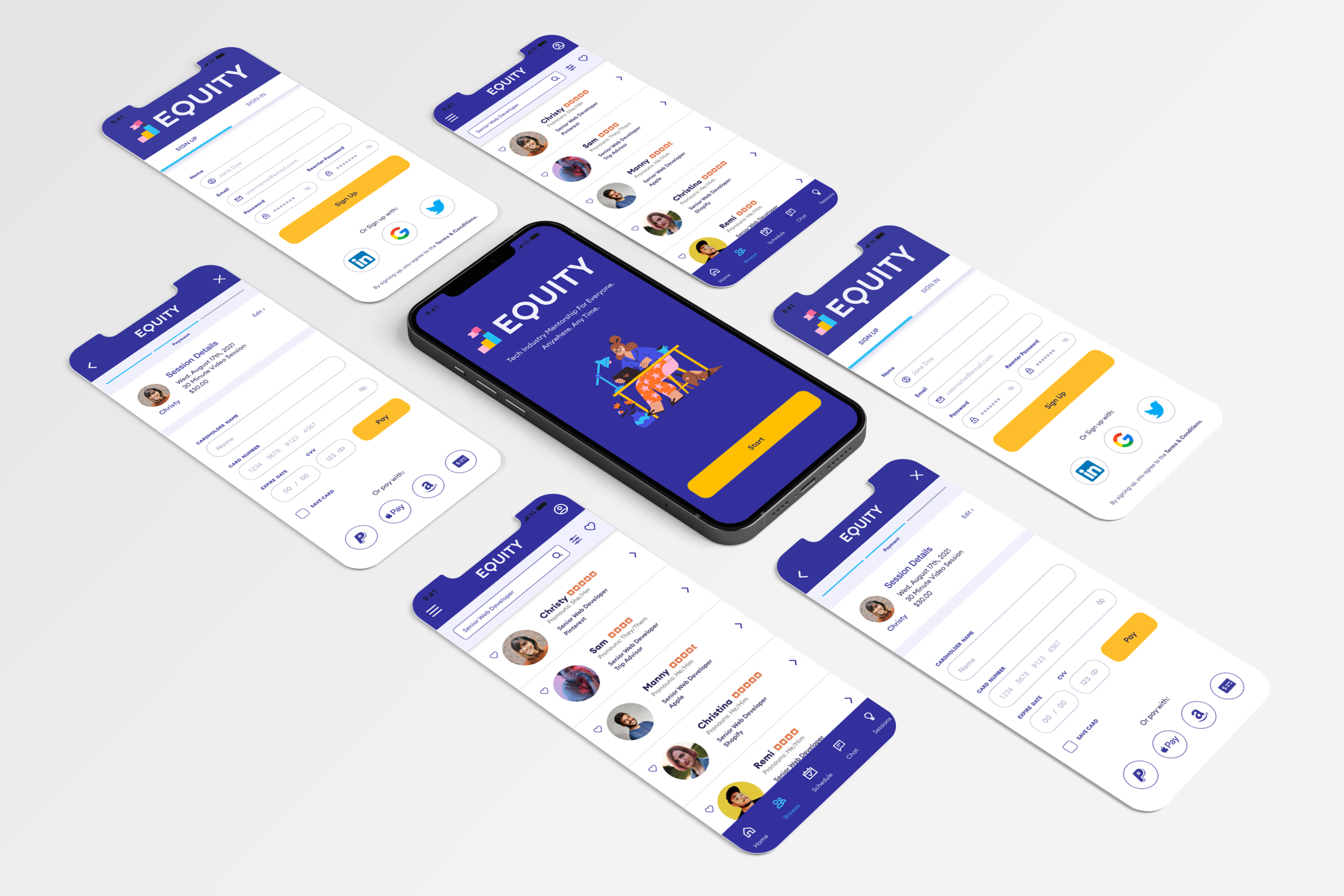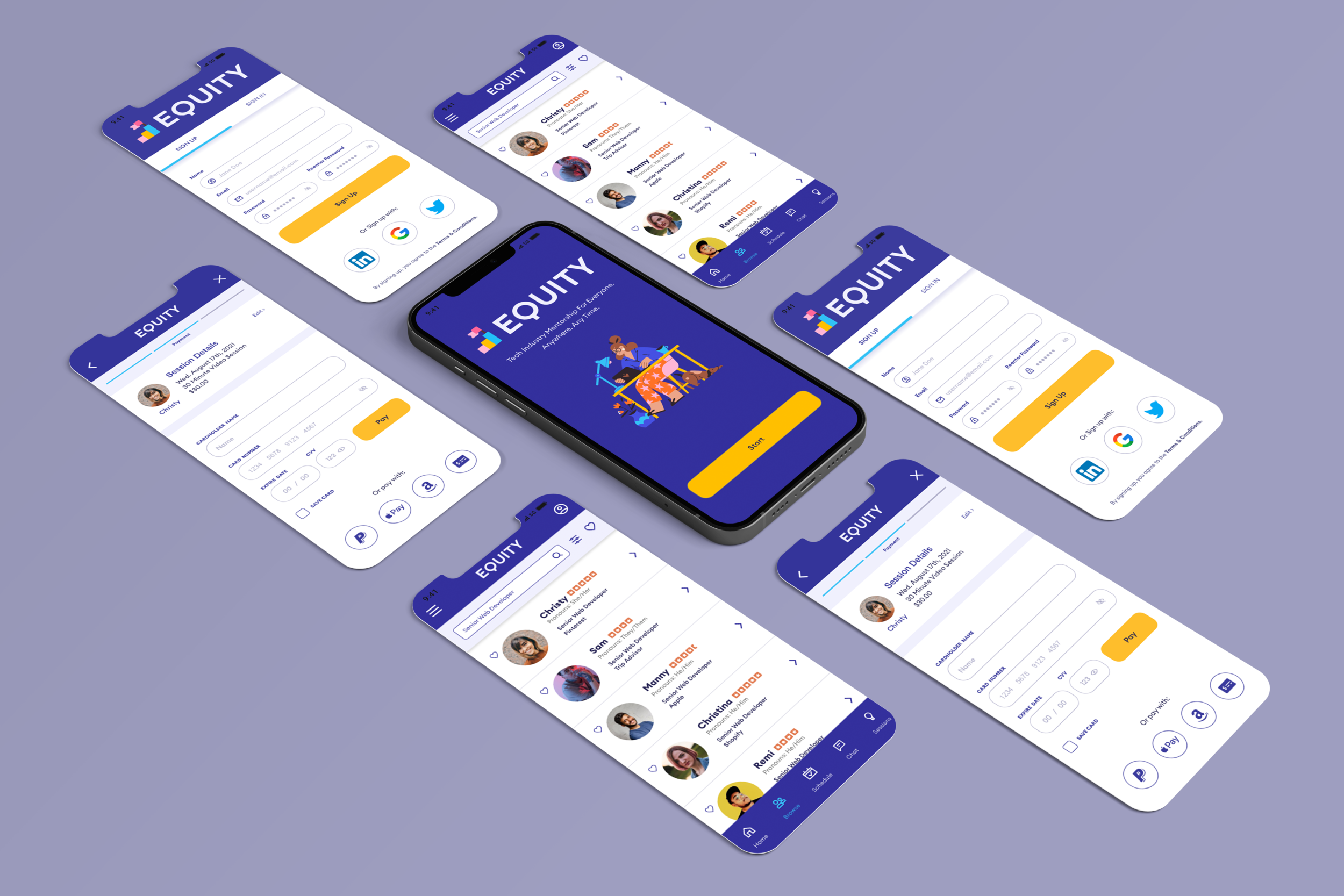
EQUITY
Fair access to meaningful Tech Industry mentorship for everyone.
Overview
PROBLEM SUMMARY
The tech industry hasn’t meaningfully moved the needle on inclusion. For marginalized groups, bias—both subtle and systemic—makes it harder to get in and even harder to grow.
OBJECTIVE
Create a platform that gives underrepresented voices the tools, guidance, and connections they need to thrive in their careers.
MY RESPONSIBILITIES
UX Research, Wireframes, Prototype, Usability Testing, UI & Style Guide, Emotional Design Strategy, Accessibility
TOOLS
Adobe XD & Suite, Usability Hub, Balsamiq, Miro, Optimal Workshop, Google Forms, Zoom
TIME 2021

Discovery
Tech’s diversity problem
The Tech industry has struggled with a diversity & inclusion problemfor years—with little progress in the last five. In response, some companies have launched DEI (Diversity, Equity, and Inclusion) initiatives to better support underrepresented groups.
This effort also aligns with the values of Millennials and Gen Z , who now make up most of the tech workforce. Research shows that diverse teams benefit both employees and the business.
Key question: What do minority professionals in tech actually need to break in, feel supported, and thrive?
Gender
Ethnicity
Tech industry demographic data as of 2021
Secondary research
An uneven playing field exists for statistically underrepresented groups in Tech (Thomas, HBR).
Obstacles & barriers in the tech industry hiring pipeline explain diversity issue (Blanche, Medium).
Minority professionals and students seek equitable opportunities to grow a meaningful career as an ‘outsider.’
Mentorship works to lift up professionals in their industry (Asare, Forbes).
Differences are a sensitive conversation for employees & companies alike due to discrimination & social progressive gains (Kolakowski, Dice).
What exists now to address the problem?
There are safe spaces where people can grow and connect, but few provide direct access to industry talent without high costs, gatekeeping, or limited opportunities to build the specific skills that matter.
And the more identities someone holds - across race, gender, class, ability - the harder it often gets. How much unpaid labor and rejection should someone have to endure just to get a fair shot? People can (and do) work through it on their own, but should they have to?
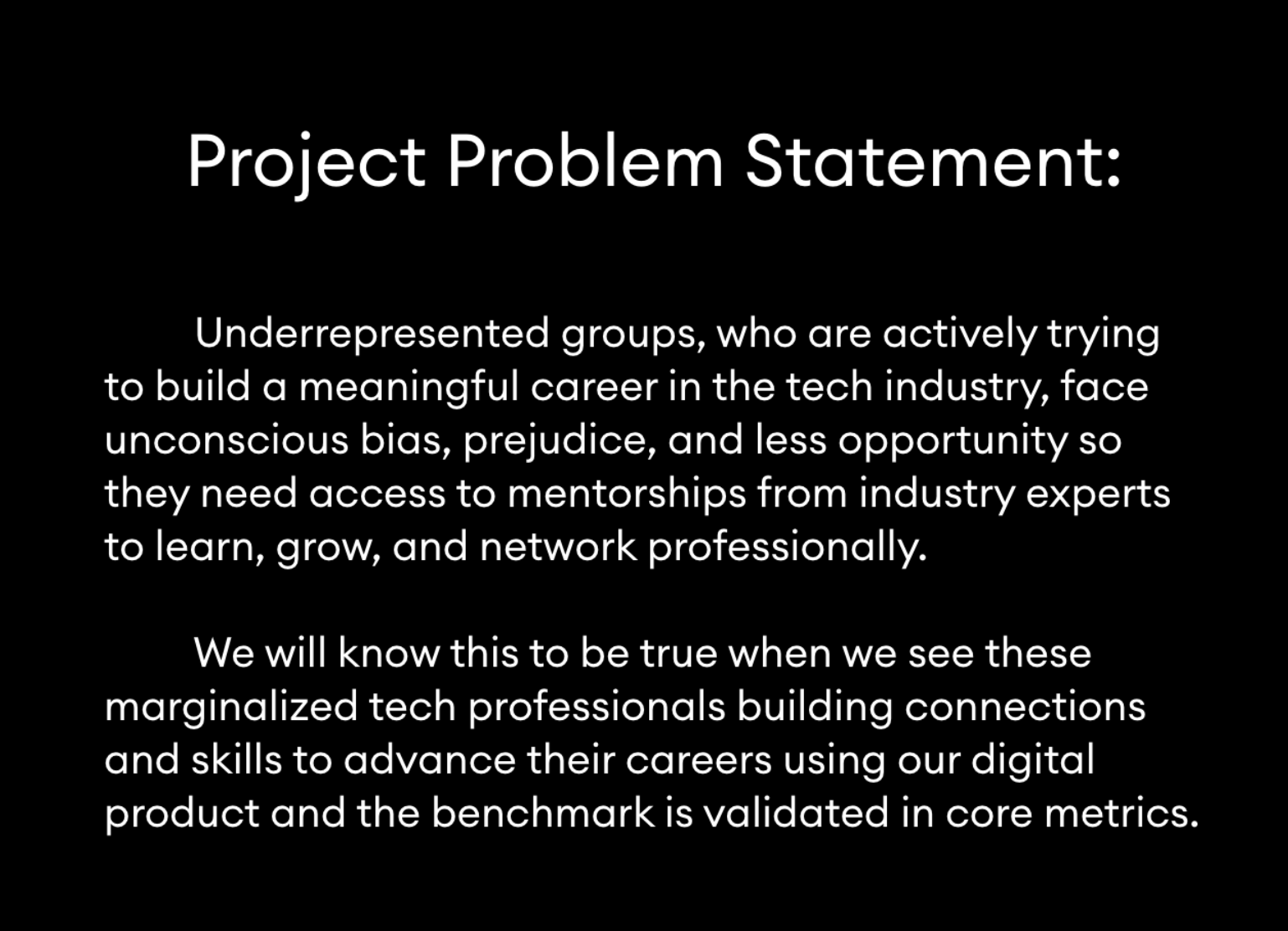

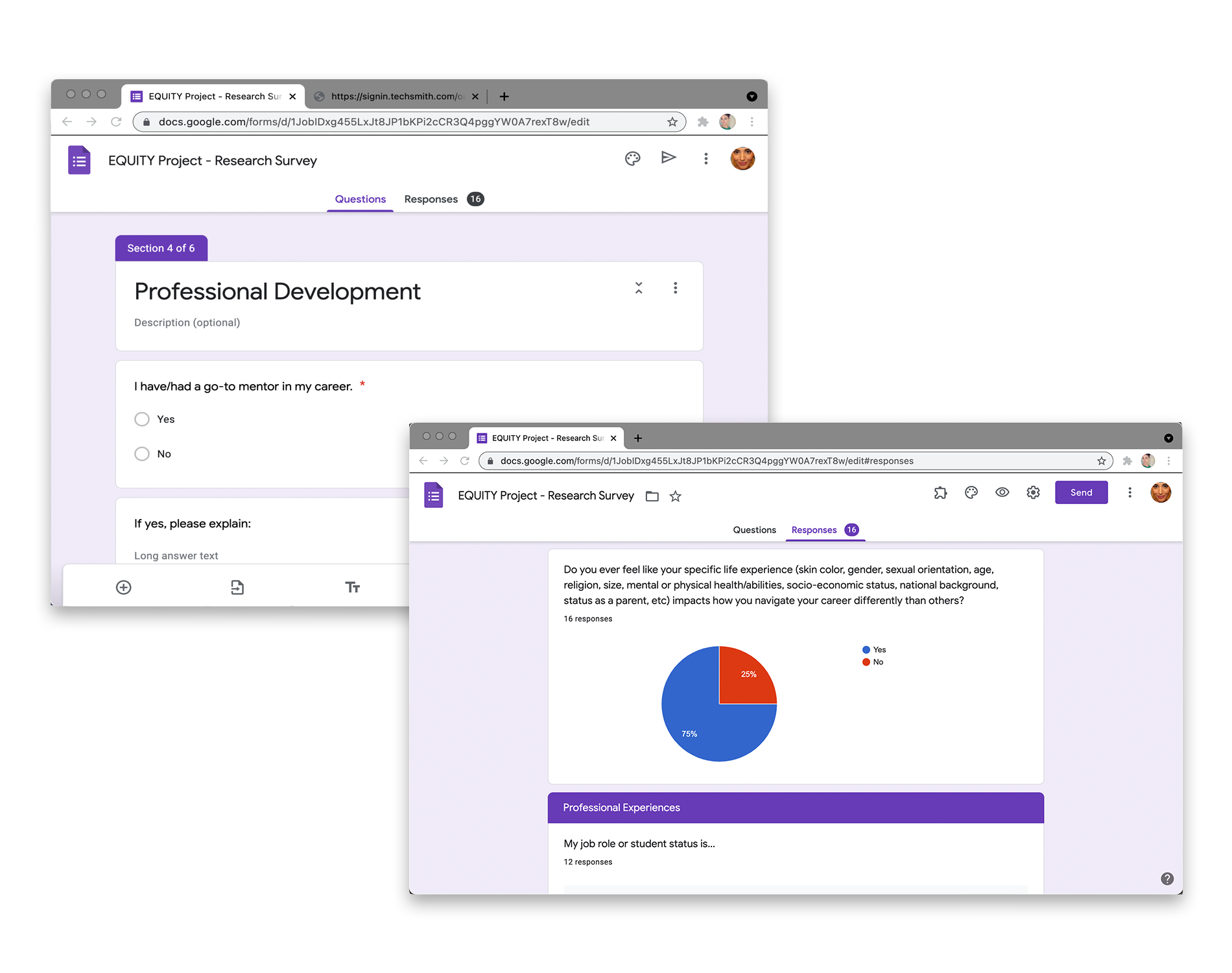
Survey concluded…
Users felt “on the outside” and excluded in tech industry environments, causing frustration and desire for change
Expressed distrust in system and employers to hire and help develop their talent through career experiences
Women & BIPOC showed worst outcomes when surveyed
20%have had a mentor already, but 100% desire one to help navigate career development & feel understood
User interviews highlighted…
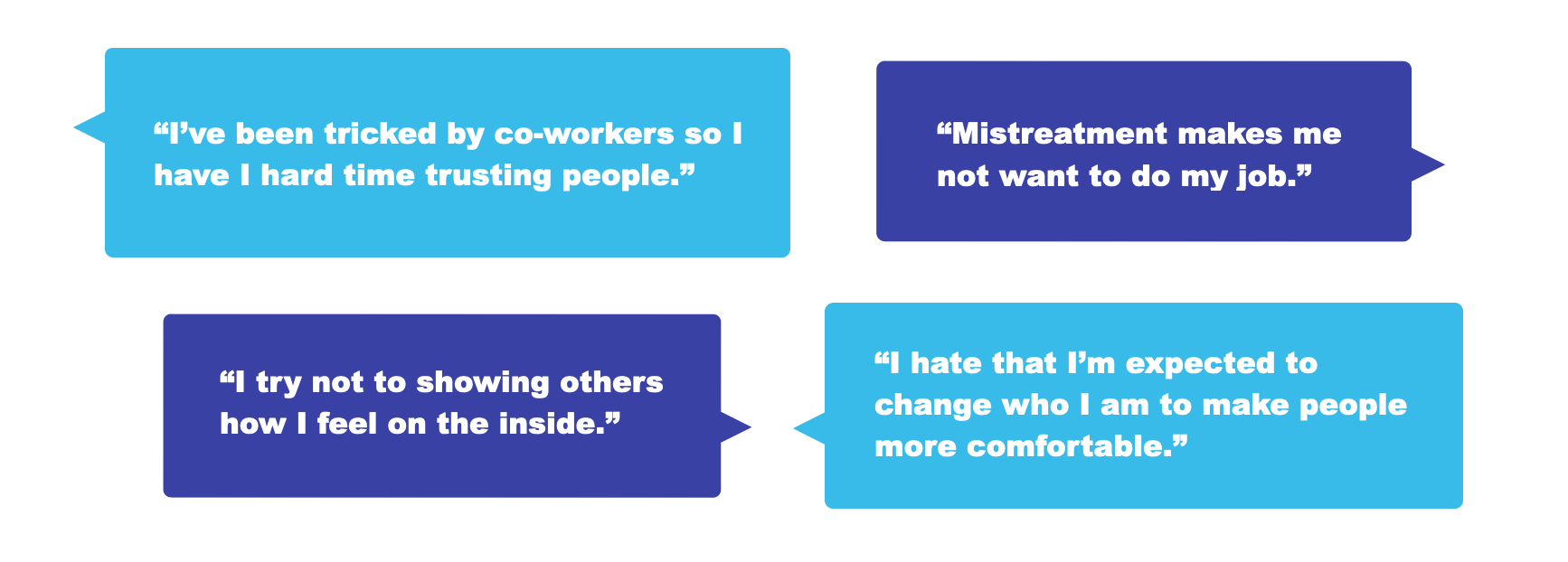
Key findings
Gatekeeping & cost are a factor: With fewer invitations, they make their own opportunities. It requires more time, money, energy, social masking, & opposition until someone says ‘yes’ vs privileged counterparts in the same roles.
Minor professionals minimize their authentic selves due to negative social and professional consequences. They desire to be seen as the qualified person they are and appreciated for their similarities and differences.
Workplace biases & mistreatment includes:
Insensitive social interactions & exclusion in key social and professional settings
Covert & intentional attacks, known as ‘dog whistles,’ by workplace or college bullies
Compromising or threatening situations
Experience underscores a negative impact on opportunity, career growth, & mental health as more privileged individuals are treated better & lifted.
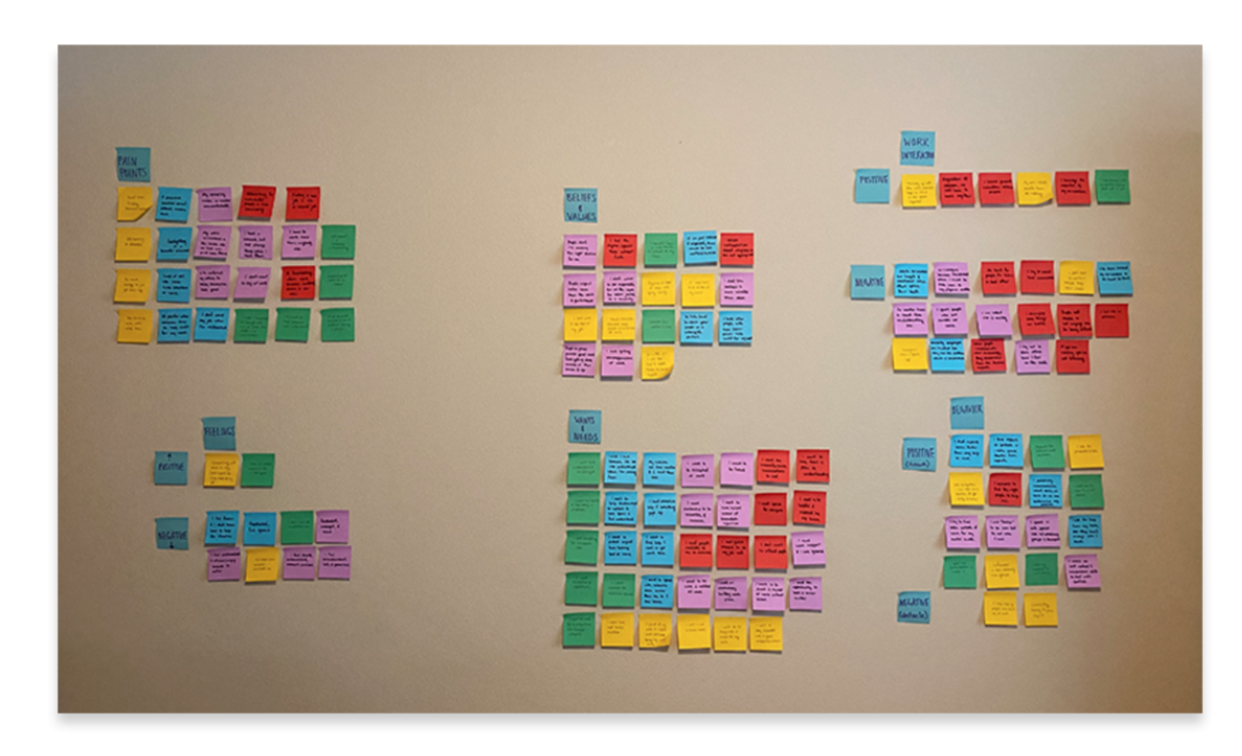
Affinity maps to distilled themes
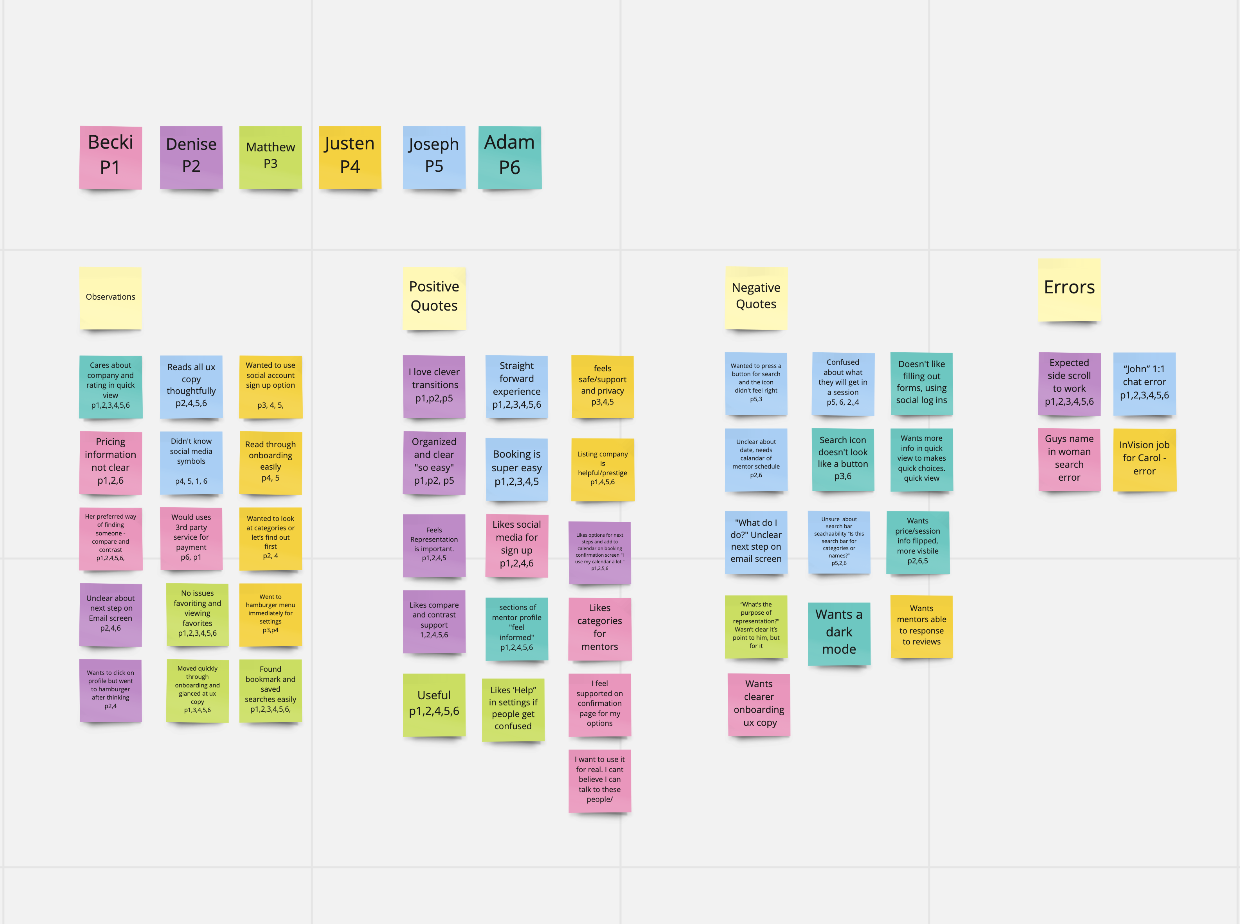
After grouping emerging themes within a ‘positive/negative’ scale, I recorded the findings, repeated the process 2-3 more times, and finished by photographing the groupings for reflection & review. What did we learn?

Biggest takeaways
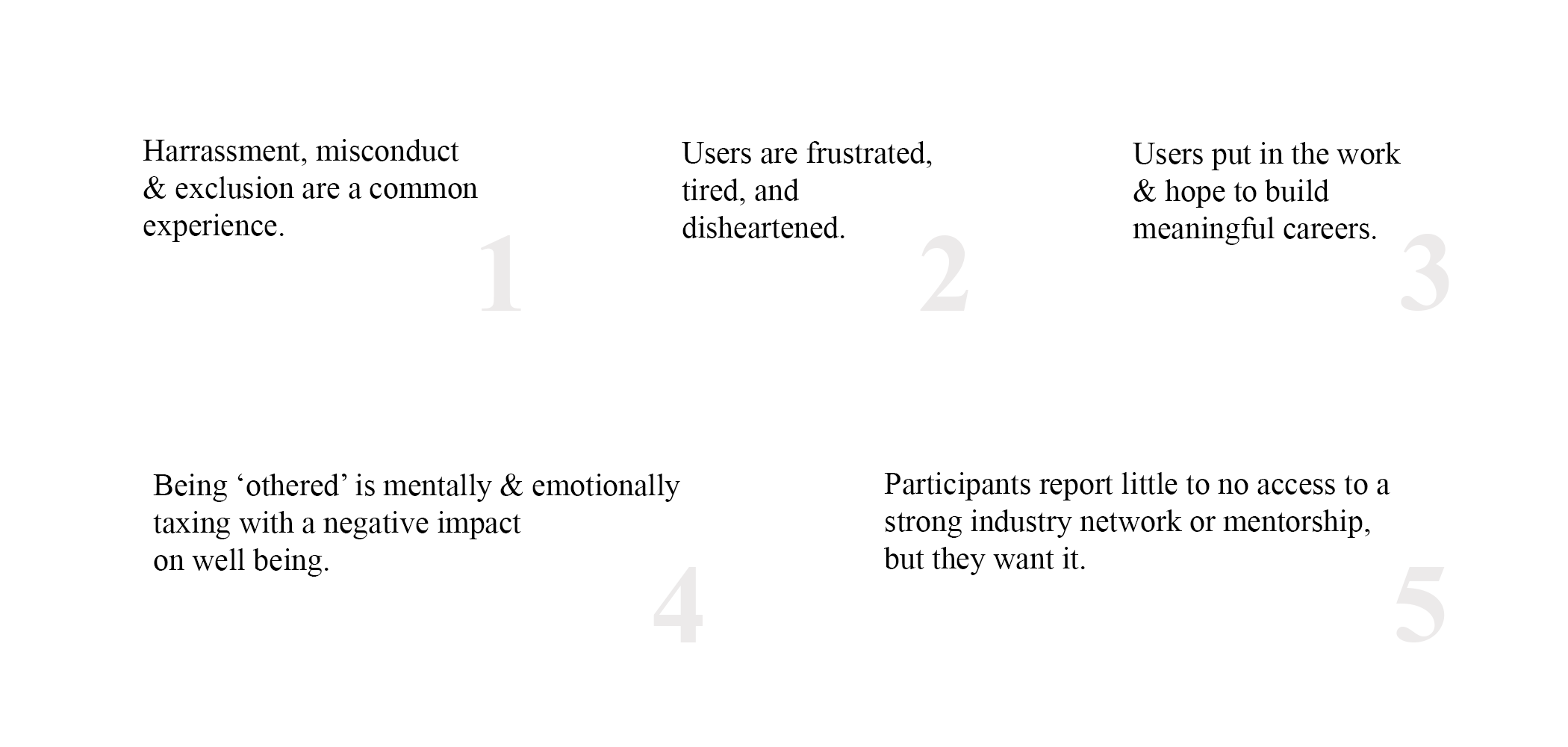
This is just an AWFUL set of experiences with devastating, high-consequence pain points.
What might we help?

Flip the script
Democratize career development
Put real career growth within reach by connecting underrepresented professionals with accessible, meaningful mentorship from seasoned tech experts who genuinely care. Provide existing and highly-experienced minority professionals mentoring opportunities as a stepping stone to climb into leadership roles.
Definition
How might we solve this?
Goal: Define the most impactful experiences that address the problem space without limitations. It creates ‘happy focuses’ for future practical applications.
Make a list of user pain points from UX Research.
Consider existing systems like workarounds.
Imagine ‘If I was a magic wand held by a user to fix each issue, what could I provide to remedy it?
Wave the magic wand & ideate on paper.
Write down the most promising solutions.
Form direction
Creating personas
4 Archetypes: the Ambitious Dreamer, the Independent Thinker, the People Person, & the Clear Leader.
Outline user stories & journey mapping
Establishing realistic scenarios of user needs & how they’d likely accomplish the task.
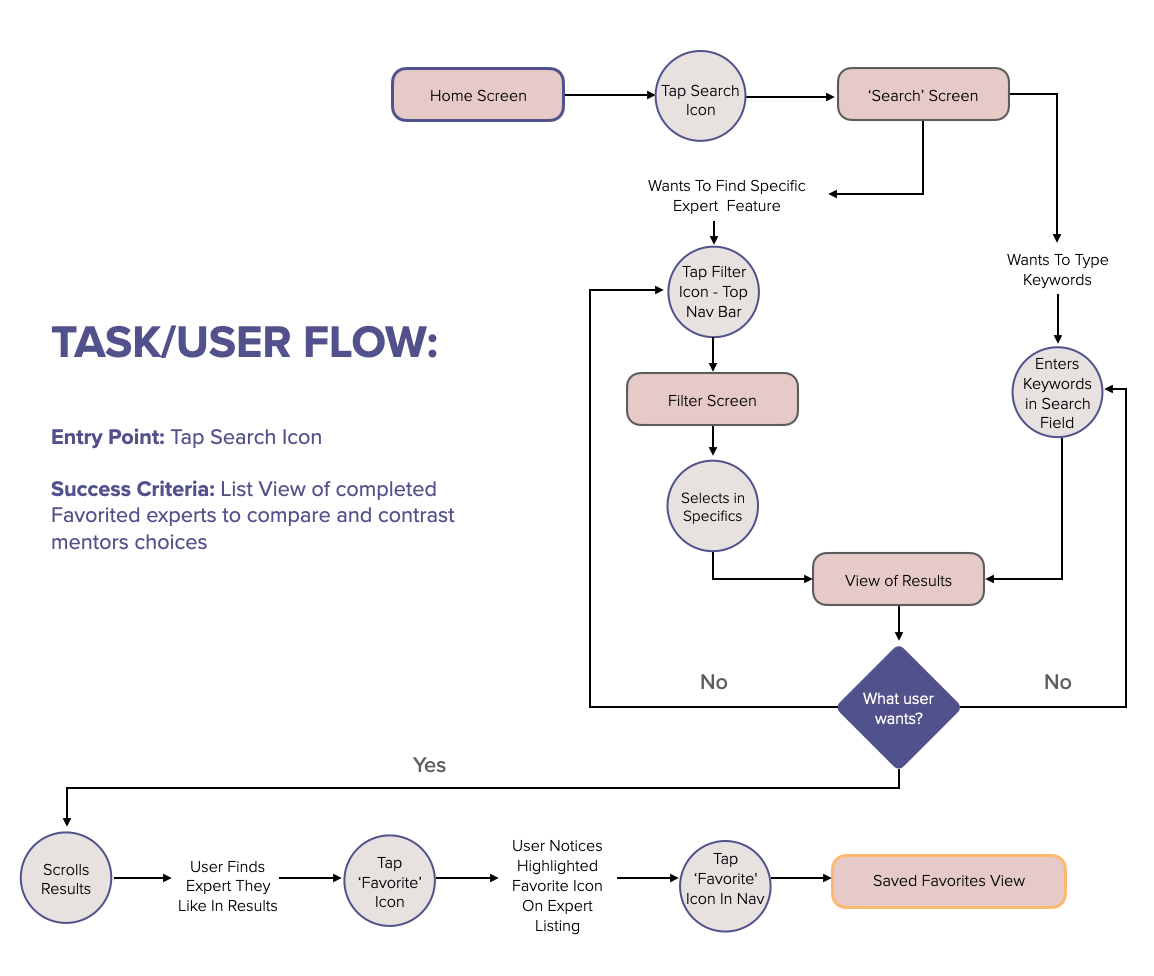
Tasks flows
My task flows aim to create “happy paths” to complete the task related to the user story. It’s making a collection of interwoven, create-your-own-adventure digital journey.
Information architecture
How to group features
Card sort participant feedback was wildly different & underscores the importance of user validation.
KEY FINDINGS:
Initial Category Assumptions: Home, Search, Calendar, Meeting Room, Settings
Card Sort Results: Home, Mentors, Schedule, Chat, Sessions, Settings
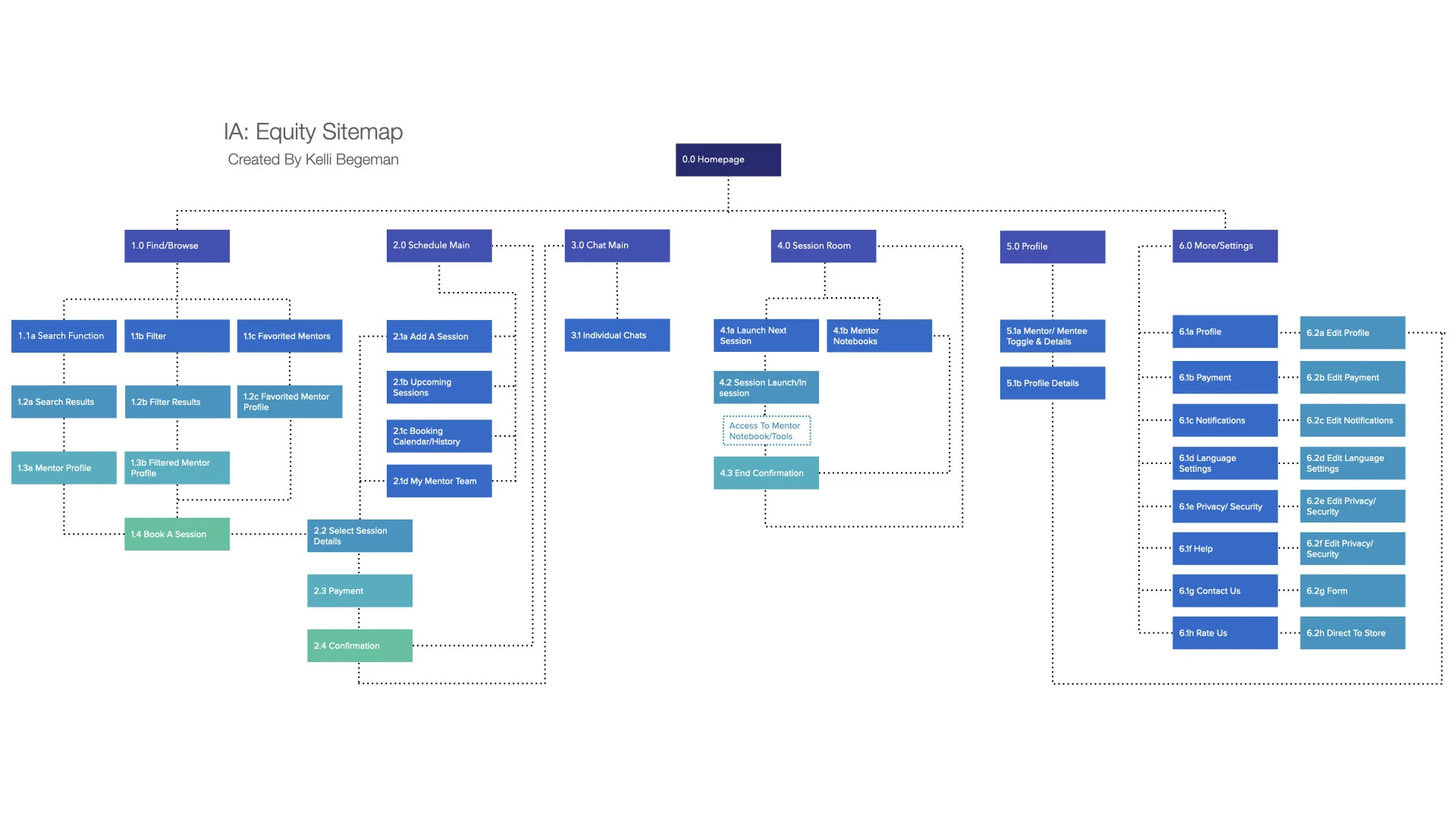
Sitemap
On the TED Radio Hour podcast, I once heard a UX Expert refer to us as digital urban planners. It gives us permission to remember how we can bring real-world interaction into the digital spaces. I will always consider the sitemap as the ‘rooms and hallways’ needed for my users to find success.
Ideate
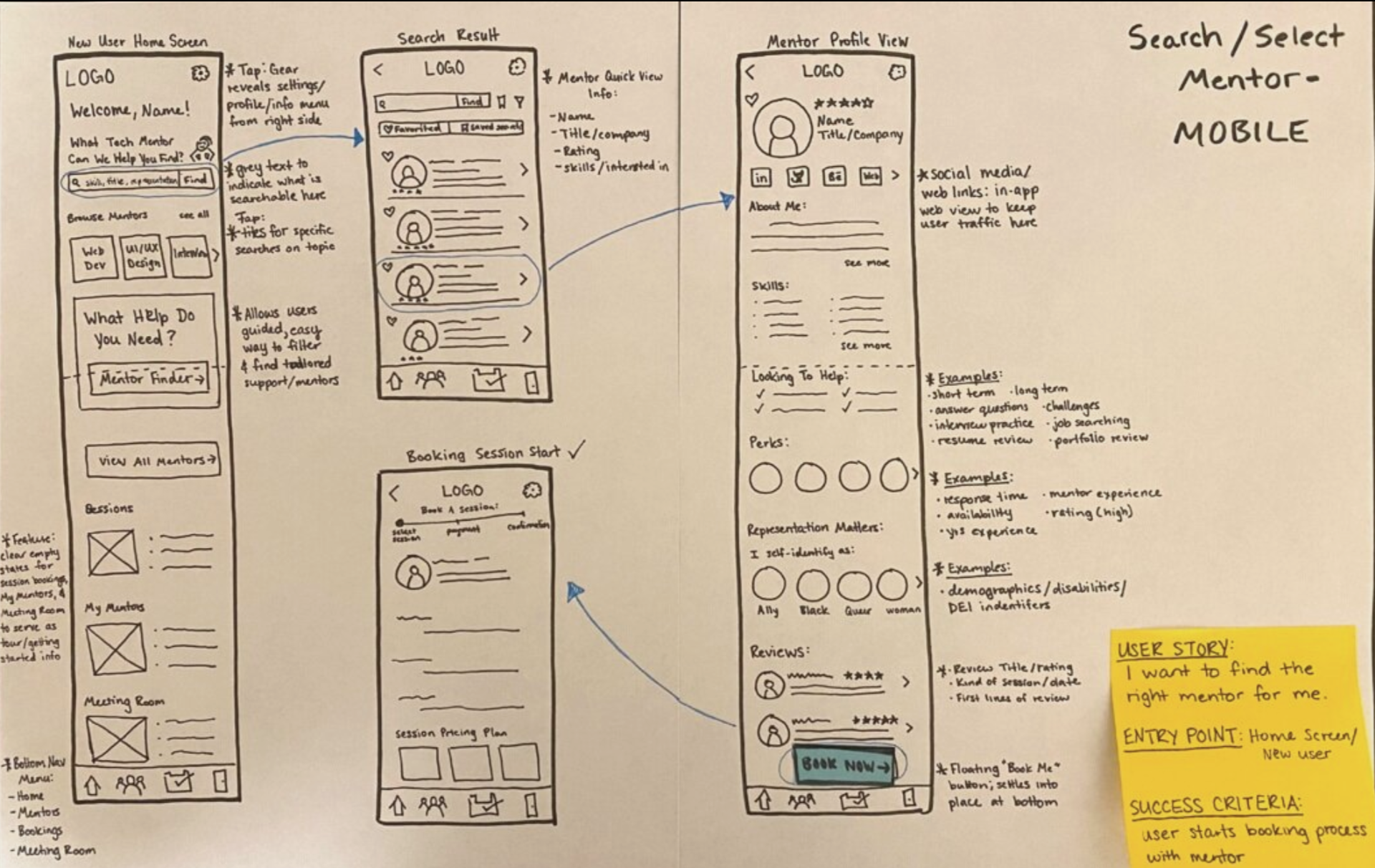
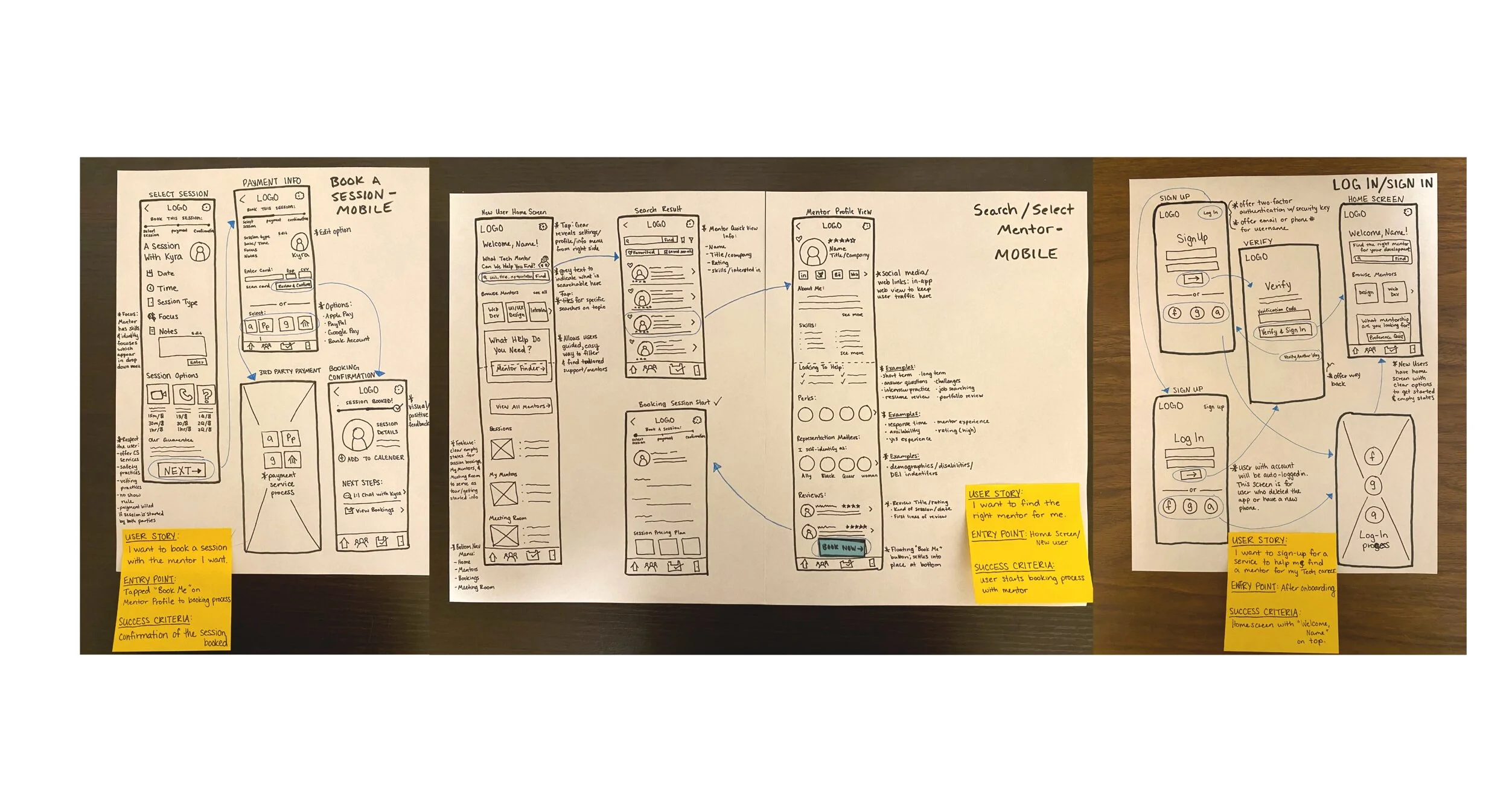
When breaking ground on new projects, I start with core features first. This portfolio case study showcases:
1. Onboarding & sign up/log in
2. Searching and favoriting potential mentors
3. Booking a session
Generate quickly via pen & paper
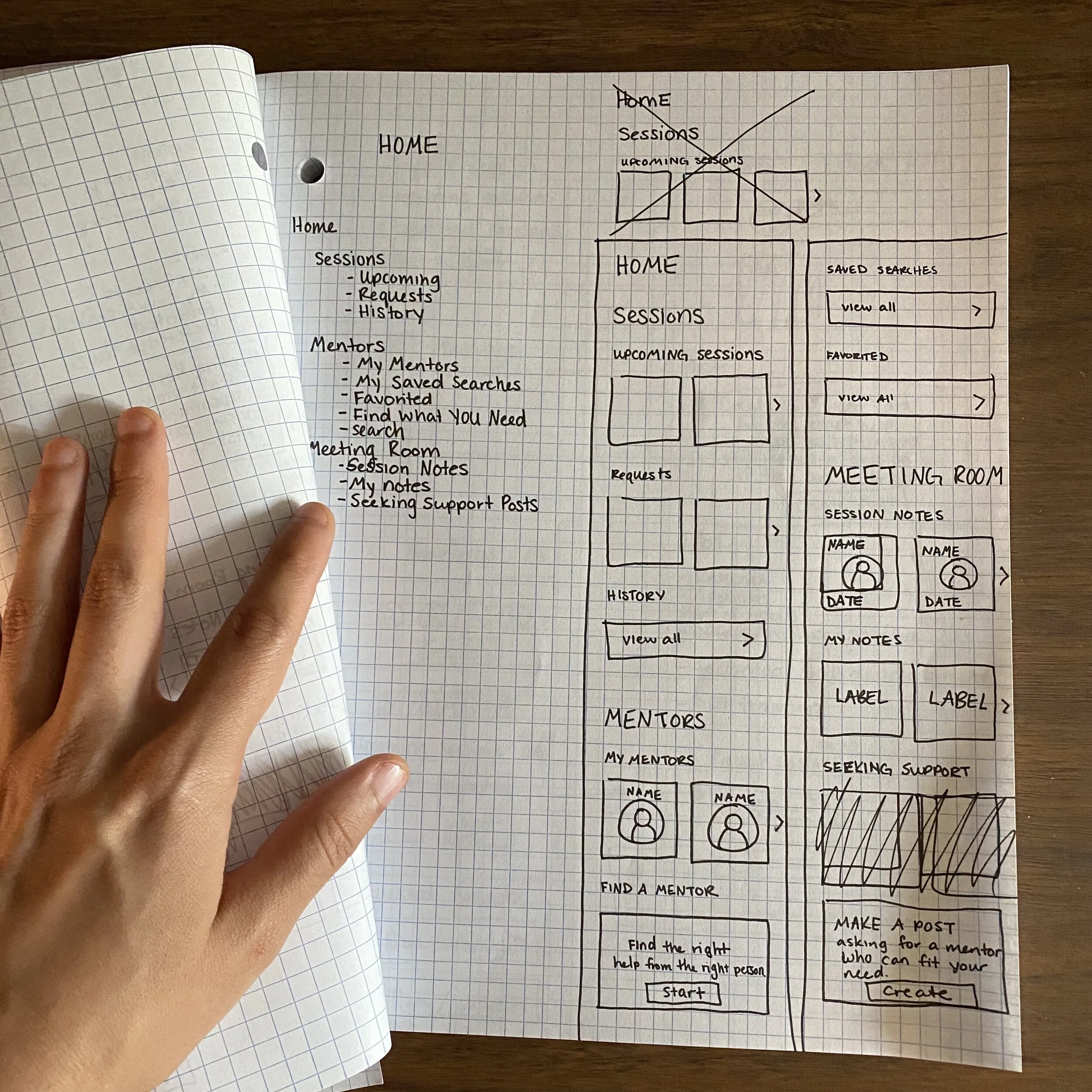
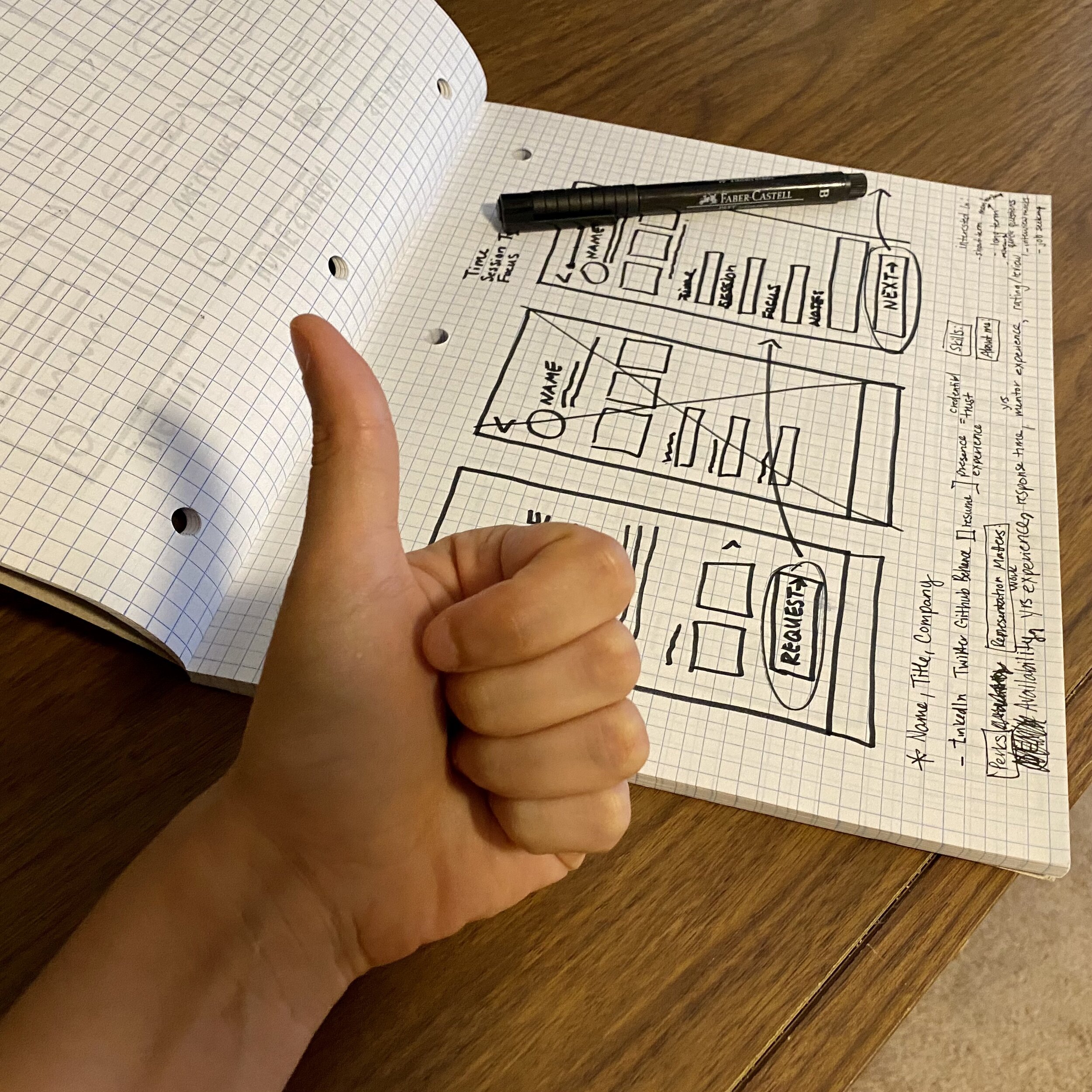
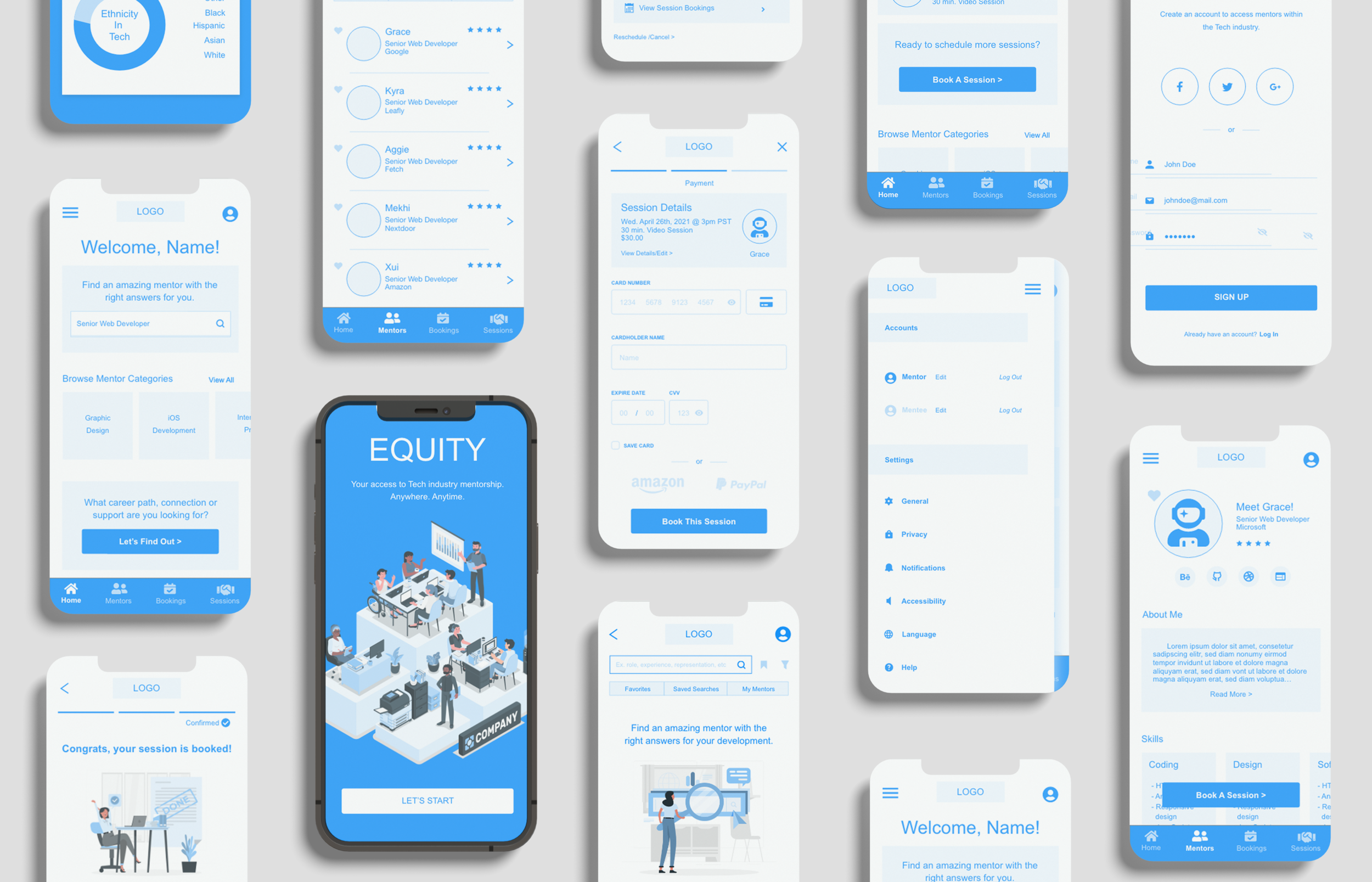
Mid-fidelity wireframes for prototype
Tool: Adobe XD
User testing
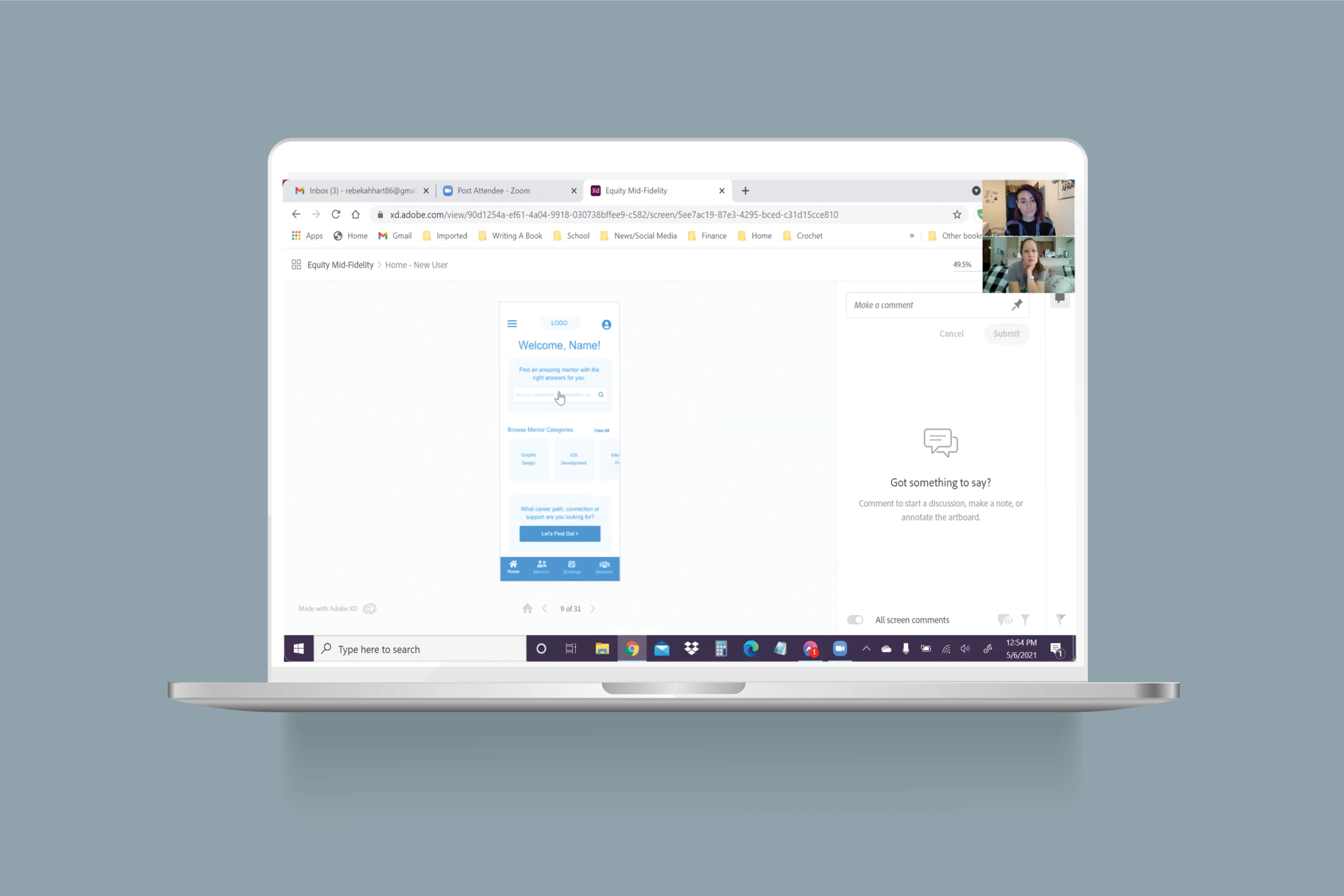
Sessions
6 usability tests with the Adobe XD prototype
30-45 minute usability tests
Heuristic evaluation with rainbow worksheet
Professional learnings
To prevent mental burnout, I staggered scheduled sessions over two days to conserve my energy while facilitating sessions.
Affinity mapping
Results
Ux copy is too vague & missing ‘equity’ messaging. Revamp UX copy to provide clarity in onboarding, cost structure, homepage, & booking confirmation.
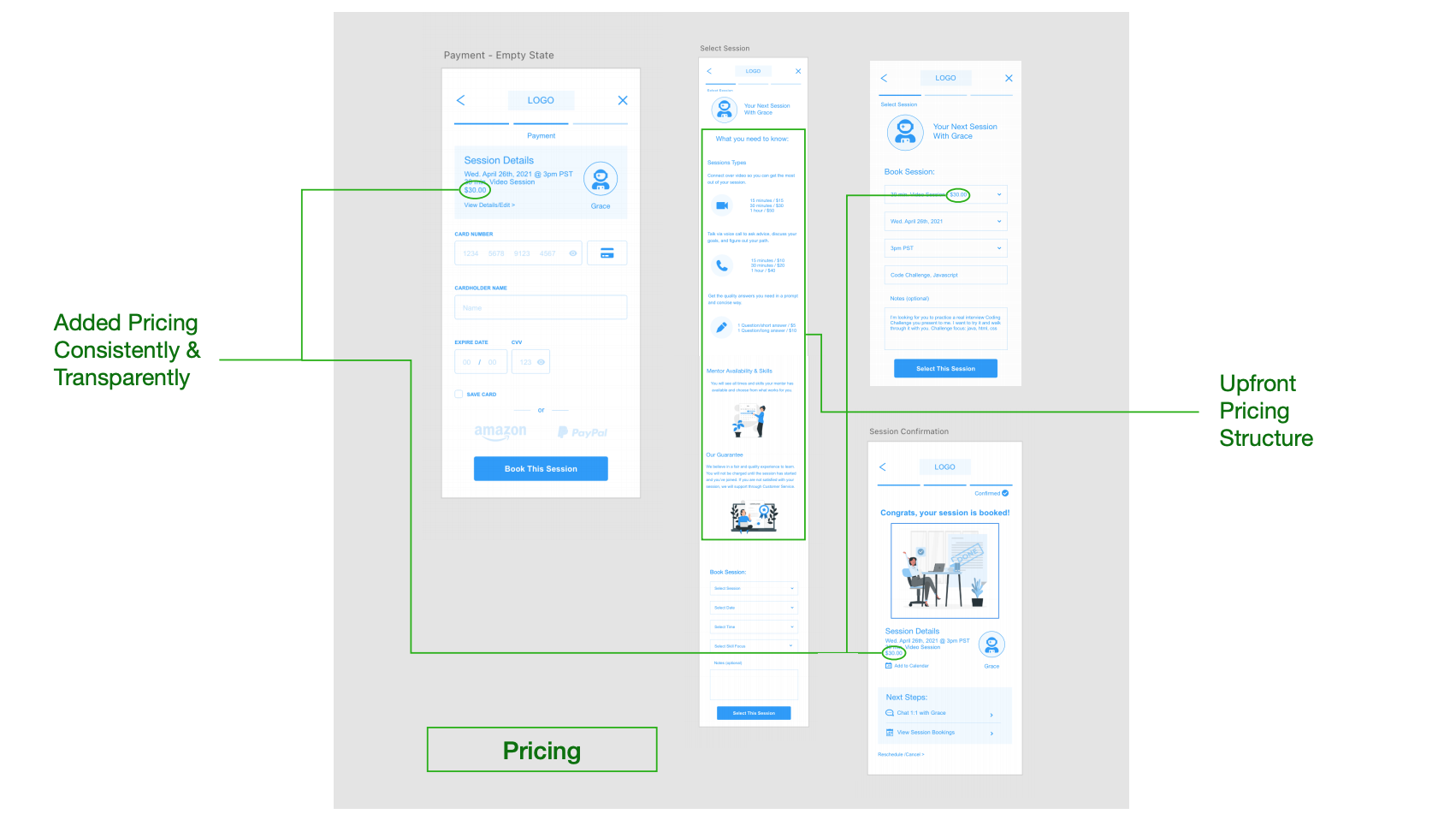
Questioned the payments system & issues with transparency around the costs. Solution - Reconsider the placement of information and show booking is safe.
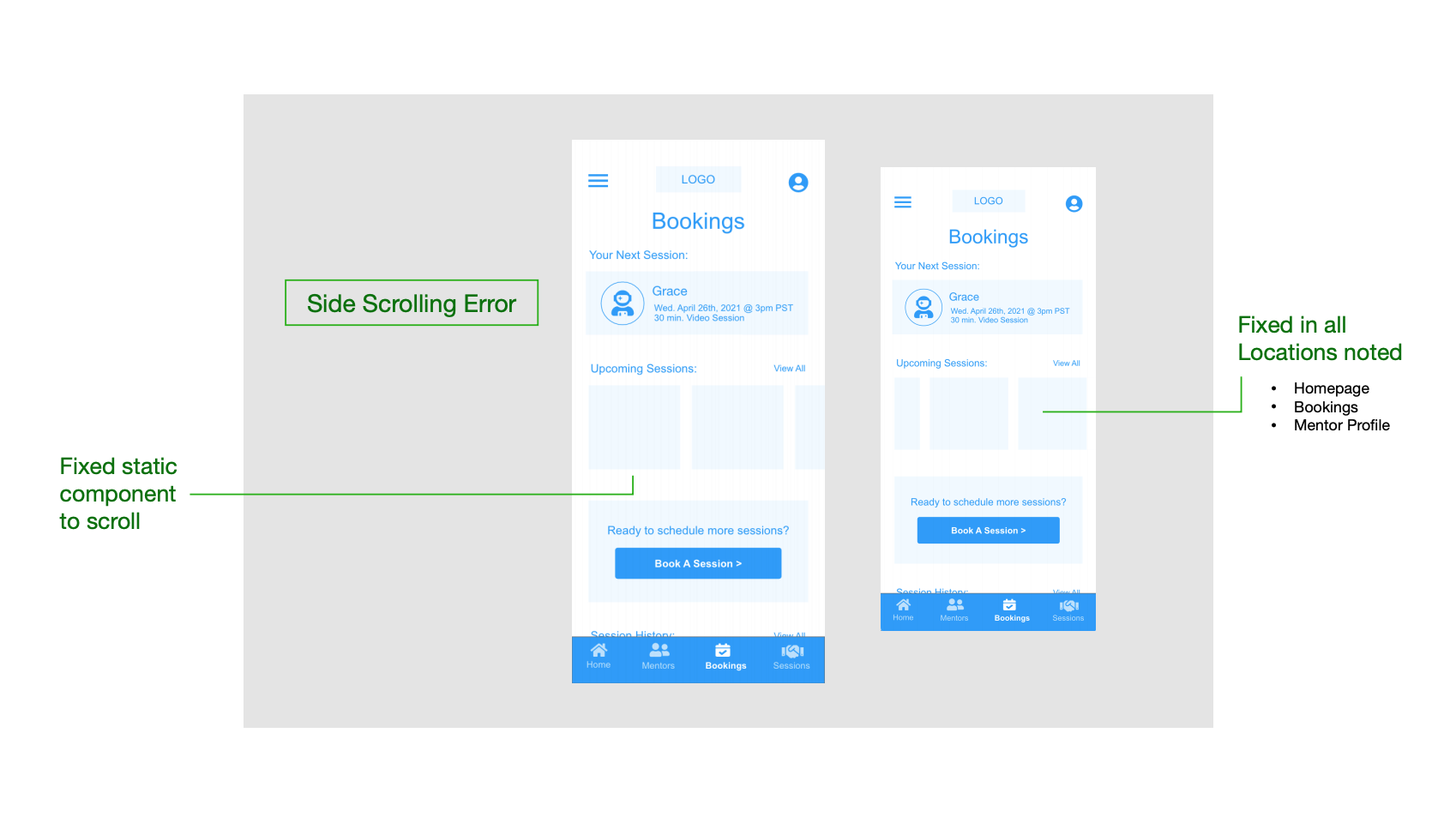
Scrolling errors for side-scrolling functions. Fix Adobe XD bug.
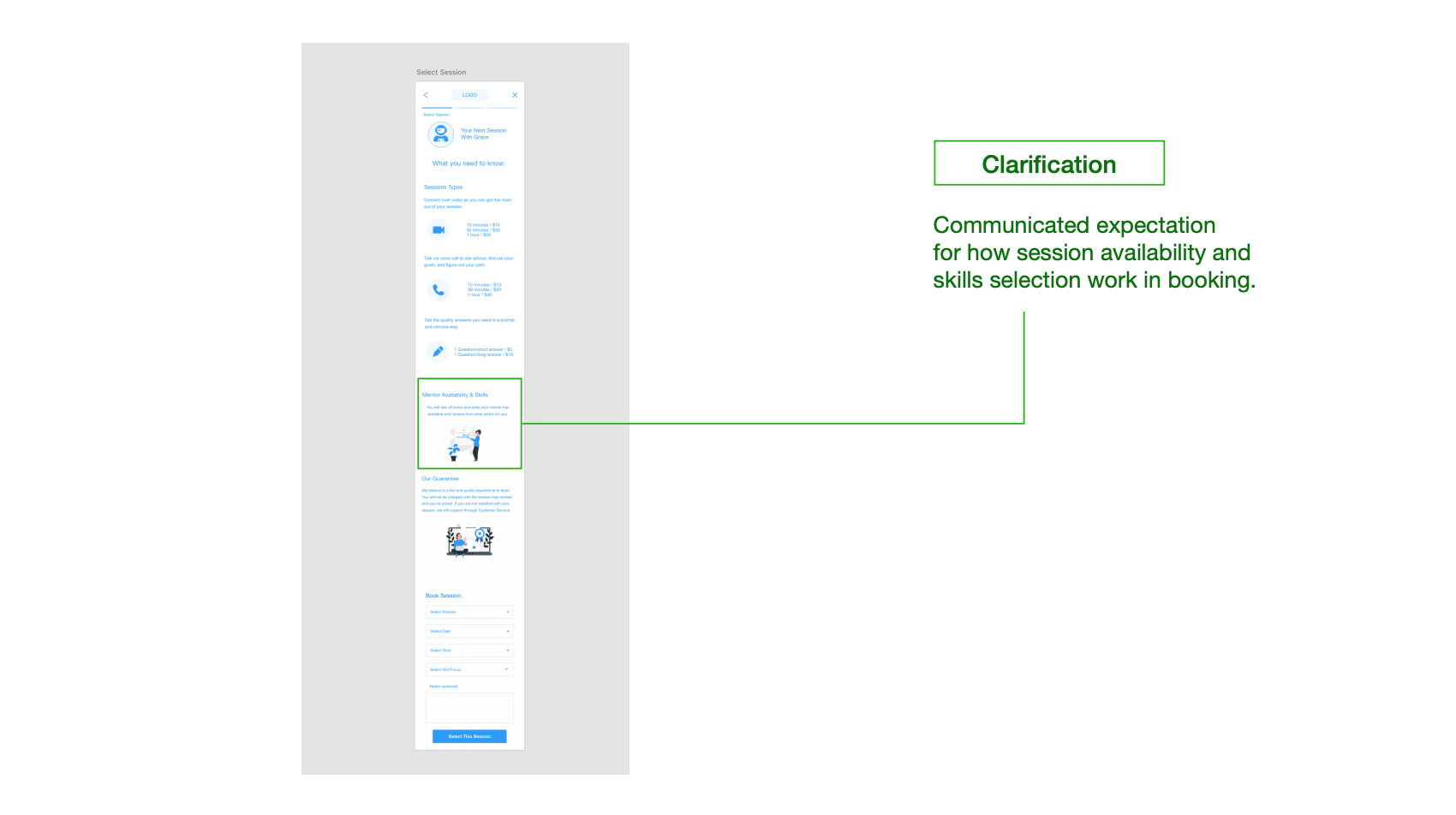
Unsure about the availability of the mentor. A visual solution (calendar/copy) and clear copy that the times showed is the availability of the mentor.
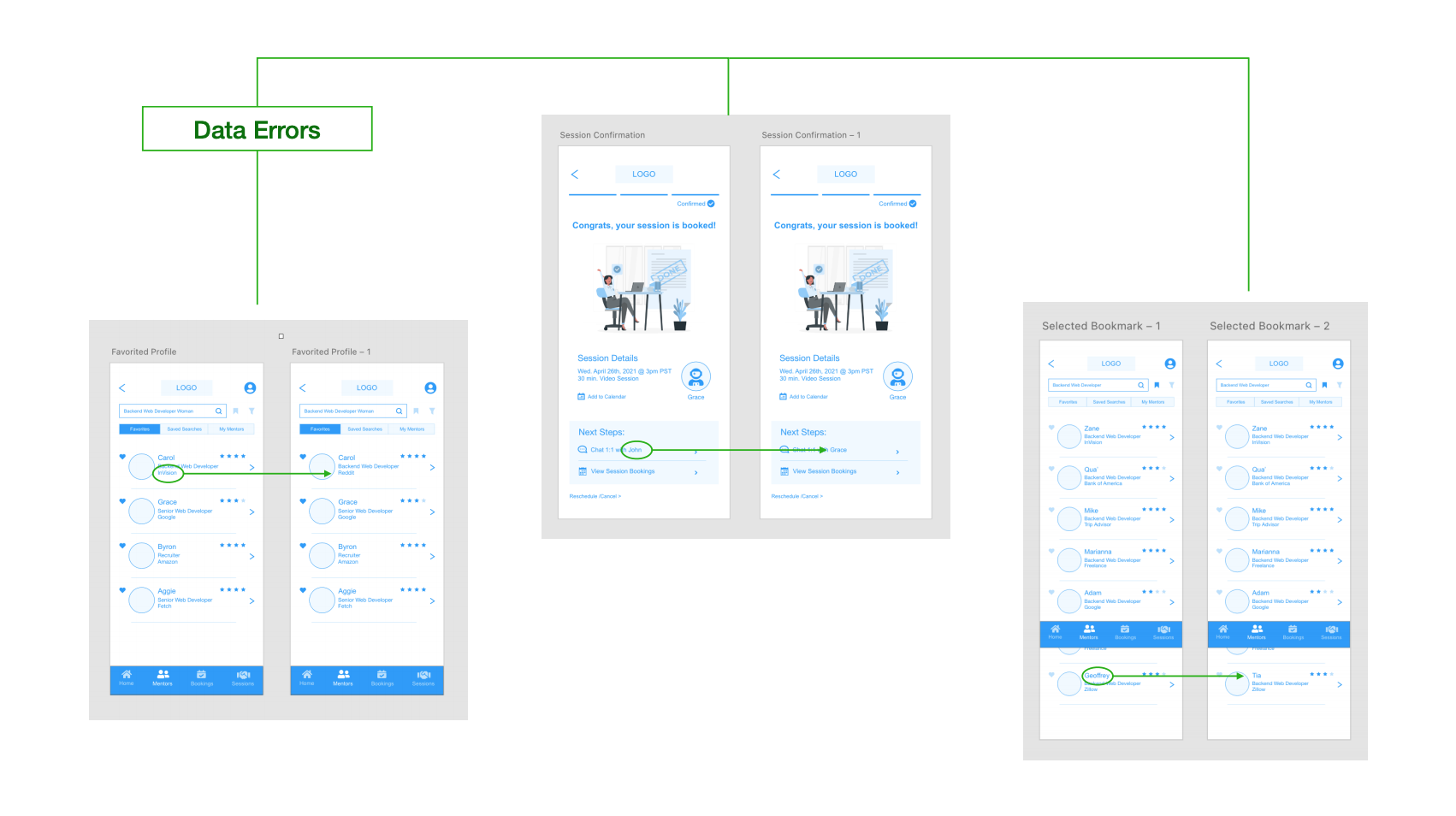
Search result errors. Distracting and inaccurate/looks like a bug. Re-wire appropriately.
Next steps
Set Expectations Early to establish transparency around costs and product expectations in order to build trust with our users.
Better explanation of user value/process during onboarding and homepage by using empty states
Ideate a more effective booking form to address sessions/availability
Fix bugs and type errors in the prototype
Deliver
Emotional design strategy
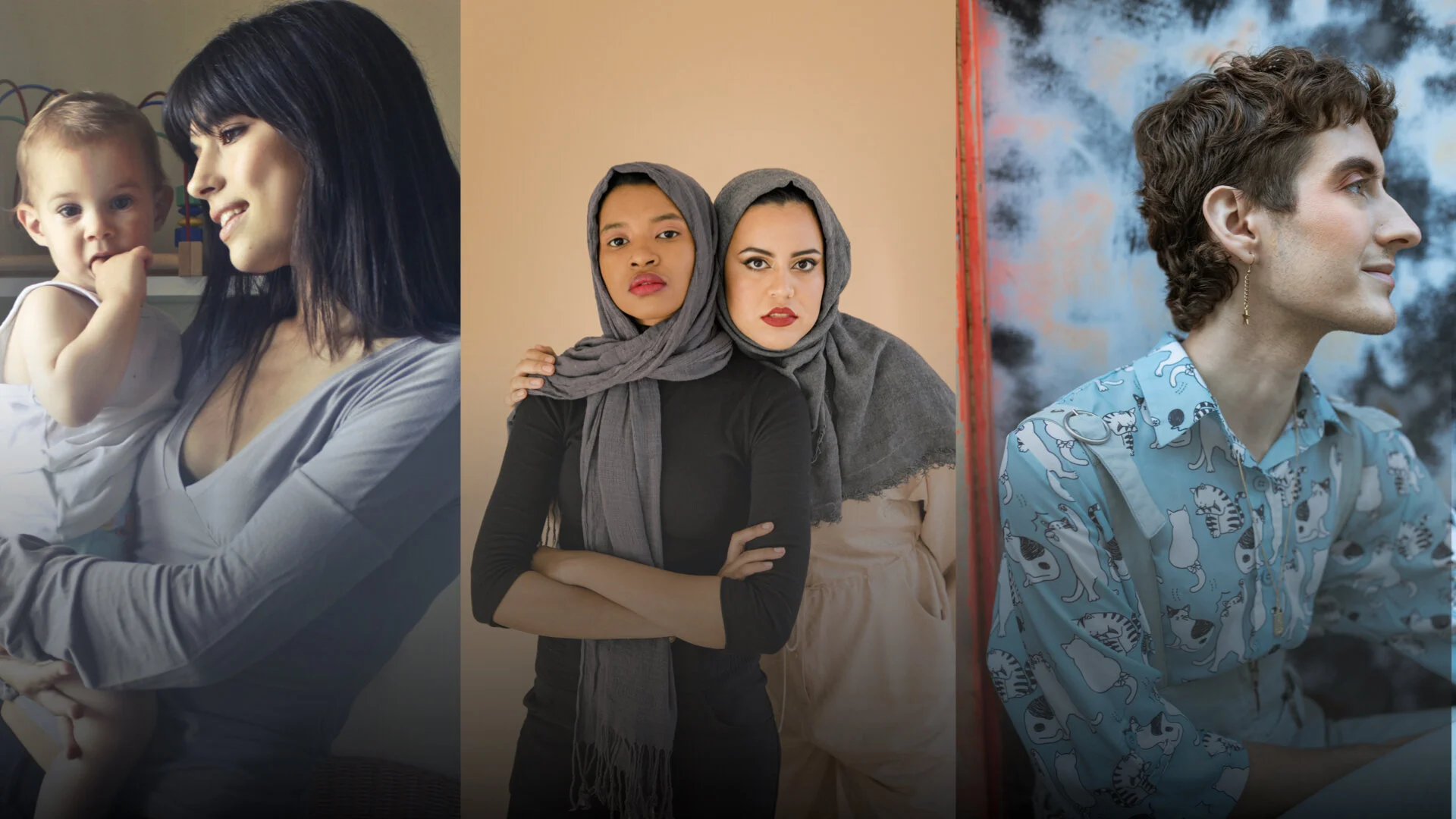
Based on research insights, the emotional language of the app intends to build psychological safety, trust, & empowerment that celebrates the diversity of people looking to grow in the Tech. The strategy includes:
Focus on humans who work and less business professional
Robust & expressive visuals: it’s ok to be yourself; no need to play it small
Welcoming, clear, & structured to establish safety & invite curiosity and learning.
Center decisions trust, safety, & ease. Leverage Nielsen’s “3 Levels of Emotional Design” & Plutchik’s Emotion Wheel.
Design system
I spent time researching modern diversity-inspired illustrations while noting complimentary styles and color theory. The imagery focused on mixed representation and skin colors. I experimented with different combinations of graphics and icon styles to create a cohesive mix of styles and built a visual story with visual interest and hierarchy.
Also, the design follows the Bootstrap 6 grid system.
Accessibility
Accessibility usability is at the ‘heart’ of User Experience Design. I could not design an anti-discrimination product without designing for those with impairment or disability. All screens meet Web Content Accessibility Guidelines (WCAG) compliance.
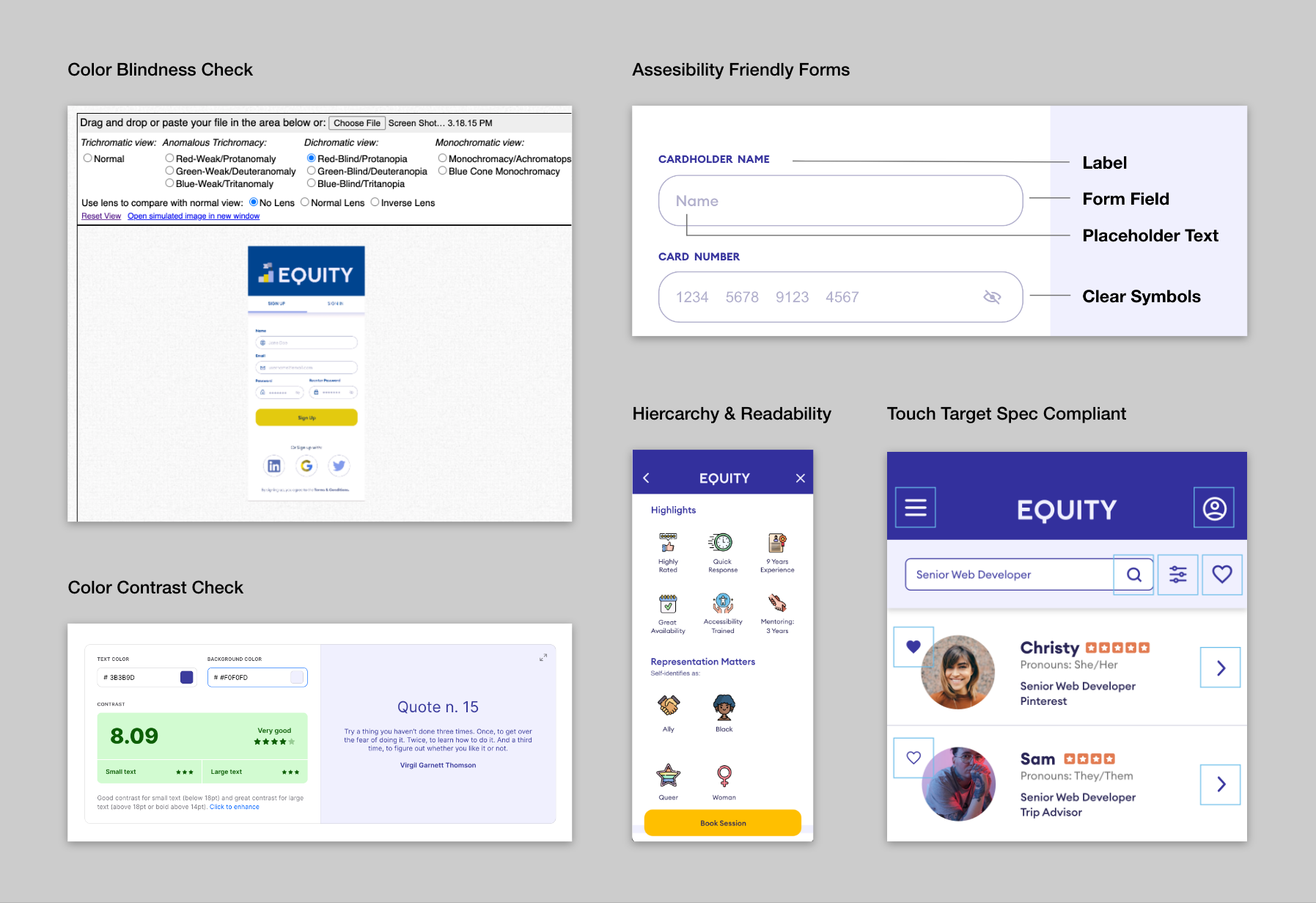
Plain Language in line with Plain Writing Act of 2010
Visual Hierarchy for reader & speech accessibility features
Instructions and help baked into screens
Colorblindness & contrast compliant
Touch targets: minimum 44px by 44px
Font size & spacing for readability
Why name it ‘Equity’?
In Diversity, Equity, & Inclusion (DEI), Equity is the process of ensuring that processes and programs are impartial, fair, & provide equal possible outcomes for every person. It’s a fitting name to match the project’s heart.
High fidelity designs
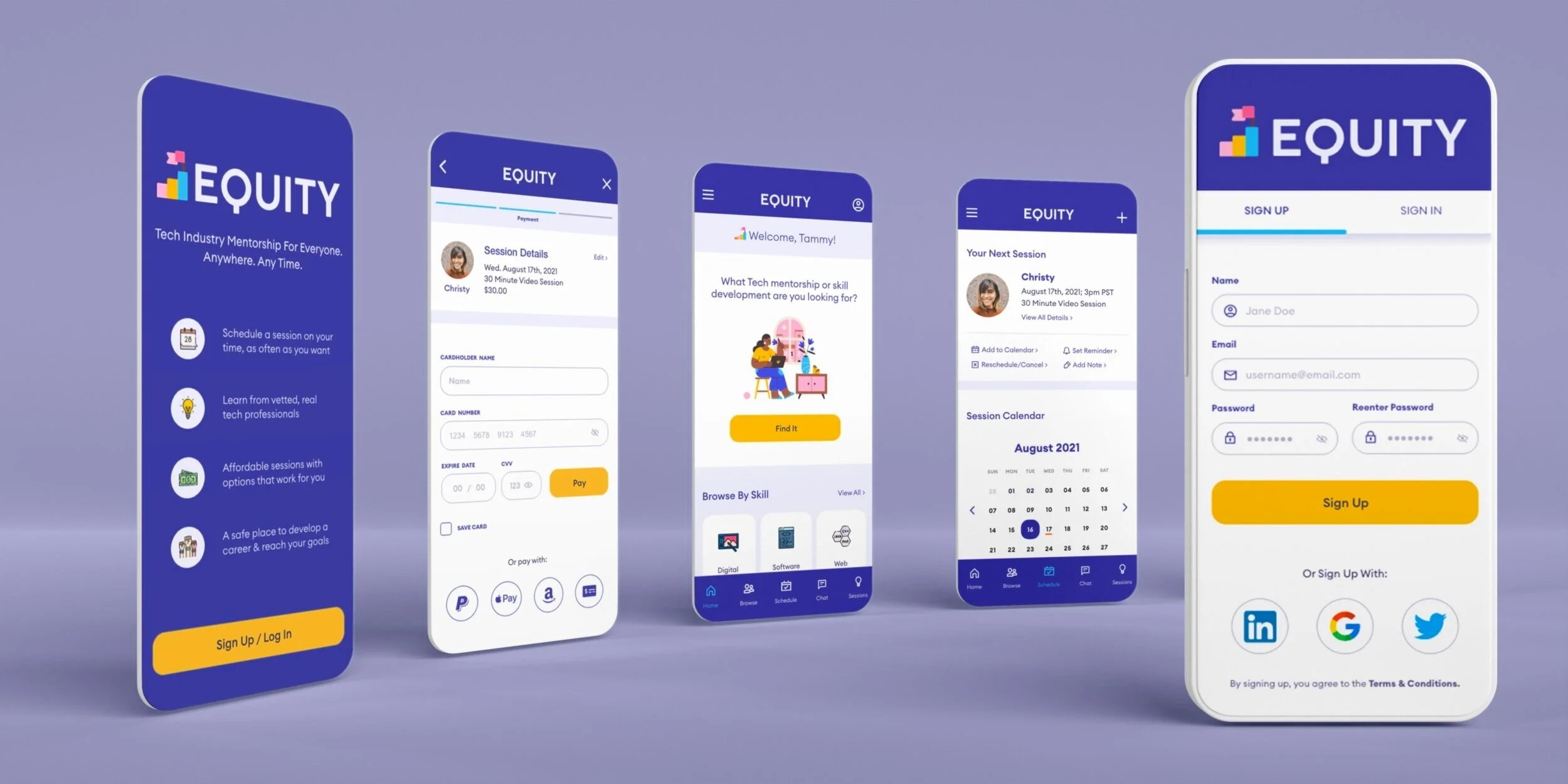
Reflections
How the process unfolded
Equity had constraints on contributors, participants, time, and budget during a global pandemic. I am grateful I gained a robust UX case study under the conditions. Equity has morphed into my passion project, and I intend to continue development.
Forging forward
I am deeply invested in the message and goals of this project. I believe this app concept is needed to help the conditions of an industry statistically poor in diversity and in need of balance. Through networking, I am making connections with engineers and designers to discuss developing Equity as a side project together.
Next phase
Next core features: Ideally, I will tackle sessions, the chat section, and note taking tools/folders
More usability testing: Continue the design process by verifying the effectiveness of design decisions.
Collaboration: Seek design reviews from more experienced designers and build a team for development.
Desktop version: I have initial web/desktop wireframes, and I aim to design a fully responsive product.